

The right choice depends less on the product name than on heat transfer, exposed surface area, container shape, handling time and the sample’s tolerance for temperatures near −78.5 °C. By comparing those factors, you can choose a size, estimate the usable quantity at receipt and set safe laboratory procedures for storage, transport and replacement.
Key takeaways
- Choose blocks for longer cooling and pellets for faster heat transfer.
- Use 3 mm pellets for rapid contact cooling and 16 mm pellets for longer-lasting coverage.
- Keep dry ice off exposed samples unless the container and sample tolerate −78.5 °C.
- Request quantity, pellet size, production details and delivery timing from your supplier.
How Blocks and Pellets Differ in Laboratory Cooling
A dry ice block lasts longer than an equal mass of pellets, while pellets transfer heat faster. Dry ice is solid carbon dioxide that sublimates at about −78.5 °C at ordinary atmospheric pressure, passing directly from solid to gas with no liquid stage under laboratory ambient conditions.
The theoretical cooling capacity depends mainly on mass: approximately 570 kJ per kilogram. One kilogram of blocks and one kilogram of pellets therefore contain roughly the same cooling potential before handling losses.
| Format | Cooling behaviour | Practical trade-off |
|---|---|---|
| Blocks | Smaller exposed surface area, slower sublimation and steadier cooling | Need more storage space and clearance, but create fewer fines and are easier to handle |
| 3 mm pellets | Rapid heat transfer through many contact points | Pack tightly around samples, but sublime quickly, leave loose fines and migrate into packaging |
| 16 mm pellets or nuggets | Faster distribution than blocks with better holding time than 3 mm pellets | A useful balance for voids around sample boxes and transport |
| Blocks | Best for surrounding a vessel or cooler | Require suitable dimensions and do not fit irregular spaces as well |
For dry ice pellets for laboratory cooling, specify the diameter; “pellets” alone is incomplete. Pellets suit void-filling and close contact around irregular sample boxes, while blocks suit a vessel or cooler surrounding. The dry ice block versus pellet choice changes cooling rate and loss, not total cooling capacity.
Neither format replaces a powered −80 °C freezer or liquid-nitrogen storage system.
Choose 3 mm Pellets, 16 mm Pellets or Blocks by Task
Choose 3 mm pellets for rapid, short-duration cooling, tight packing around a small vessel, or a cold bath needing many contact points. Their high surface area accelerates sublimation and creates more loose fines.
| Option | Best use | Main trade-off |
|---|---|---|
| 3 mm pellets | Rapid pre-cooling, cold-bath preparation, curved vessels and small irregular gaps | Fast heat transfer, but greater sublimation and loose-material handling |
| 16 mm pellets | Prolonged transport where sample boxes have voids around them | Better holding time than 3 mm pellets while still filling gaps |
| Blocks | Vessel surrounding, cooler loading, stable mass and longer transport | Slowest sublimation, but requires clearance and careful sizing |
Use dry ice pellets for laboratory cooling when voids or curved surfaces prevent consistent block contact. Choose blocks when a block dimension will fit without crushing specimens or secondary packaging; a block that is too large can apply damaging pressure during loading.
The dry ice block versus pellet decision changes release rate, not cooling capacity. Equal masses contain roughly equal cooling potential, so the shape only affects how quickly that energy is transferred and how much sublimates before use.
For dry ice blocks or pellets for laboratory cooling Bangalore laboratories, match the format to geometry, duration and handling tolerance rather than assuming one shape is colder.
Use Dry Ice Around Samples Without Damaging Them
A sample can be damaged by dry ice even when the package stays cold. At about −78.5 °C, direct contact can freeze unsuitable materials, crack glass, cause thermal shock, alter assay performance, and damage labels, seals or plastics.
1. Check the sample’s validated storage range before choosing dry ice pellets for laboratory cooling. Confirm the instrument manufacturer’s compatibility guidance as well. Use another cooling method when the sample, container or instrument is not rated for temperatures near −78.5 °C.
2. Keep the dry ice outside the sealed primary sample container. Place cardboard, foam or a purpose-designed insulating layer between them, then leave airflow paths around the sample package. For dry ice blocks for laboratories in Bangalore, confirm that the block dimensions fit without crushing specimens or secondary packaging.
3. To replace sublimated material, open the outer package briefly. Use tongs or a scoop, add dry ice around—not directly onto—the primary container, and close the vented secondary packaging without making it airtight.
Never seal dry ice in a cooler, bottle, tube, shipping box or secondary container without a gas-escape path: one kilogram can produce roughly 0.5–0.55 cubic metres of carbon dioxide gas near room temperature, creating dangerous pressure.
Do not place loose pellets where they can migrate into closures, labels or instrument parts. A cardboard or foam barrier reduces contact while preserving cooling around the package. Record the sample temperature if the assay is sensitive; a cold exterior does not prove that the contents remained within their validated range.
Specify Quantity, Quality and Delivery for a Bangalore Laboratory
Order by usable kilograms at receipt, not by the product name. Quantity depends on sample heat load, insulation, transport duration, opening frequency, ambient warmth, forced airflow and expected sublimation. Define the usable weight required on arrival, the maximum dispatch-to-use interval and the package’s vented design.
Ask a laboratory dry ice supplier bangalore for these details:
- Blocks: mass per block, dimensions, production or dispatch time, packaging and minimum acceptable delivered weight. A search for dry ice blocks for laboratories bangalore should lead to a specification, not a generic kilogram quote.
- Pellets: nominal diameter or size range, such as 3 mm or 16 mm, plus the expected amount of fine material.
- Cultures, diagnostic materials and analytical samples: CO₂ grade, purity statement, oil limit, water limit, batch number and batch certificate. “Food-grade,” “industrial” and “laboratory use” are not interchangeable without these details.
- Air shipment: UN 1845 marking, compliant vented packaging and required documentation.
| Option | Specify | Main trade-off |
|---|---|---|
| Blocks | Mass, dimensions and delivered weight | Slower sublimation, but poor fit can crush packaging |
| 3 mm pellets | Diameter and fines percentage | Fast contact cooling with greater loss |
| 16 mm pellets | Diameter and fines percentage | Better distribution with longer holding time |
Ask SK Dry Ice to confirm delivered weight, size, packaging, batch documents and dispatch timing. Treat dry ice blasting separately: specify the substrate, contamination, extraction and waste controls rather than combining it with cooling-stock procurement.
Related products
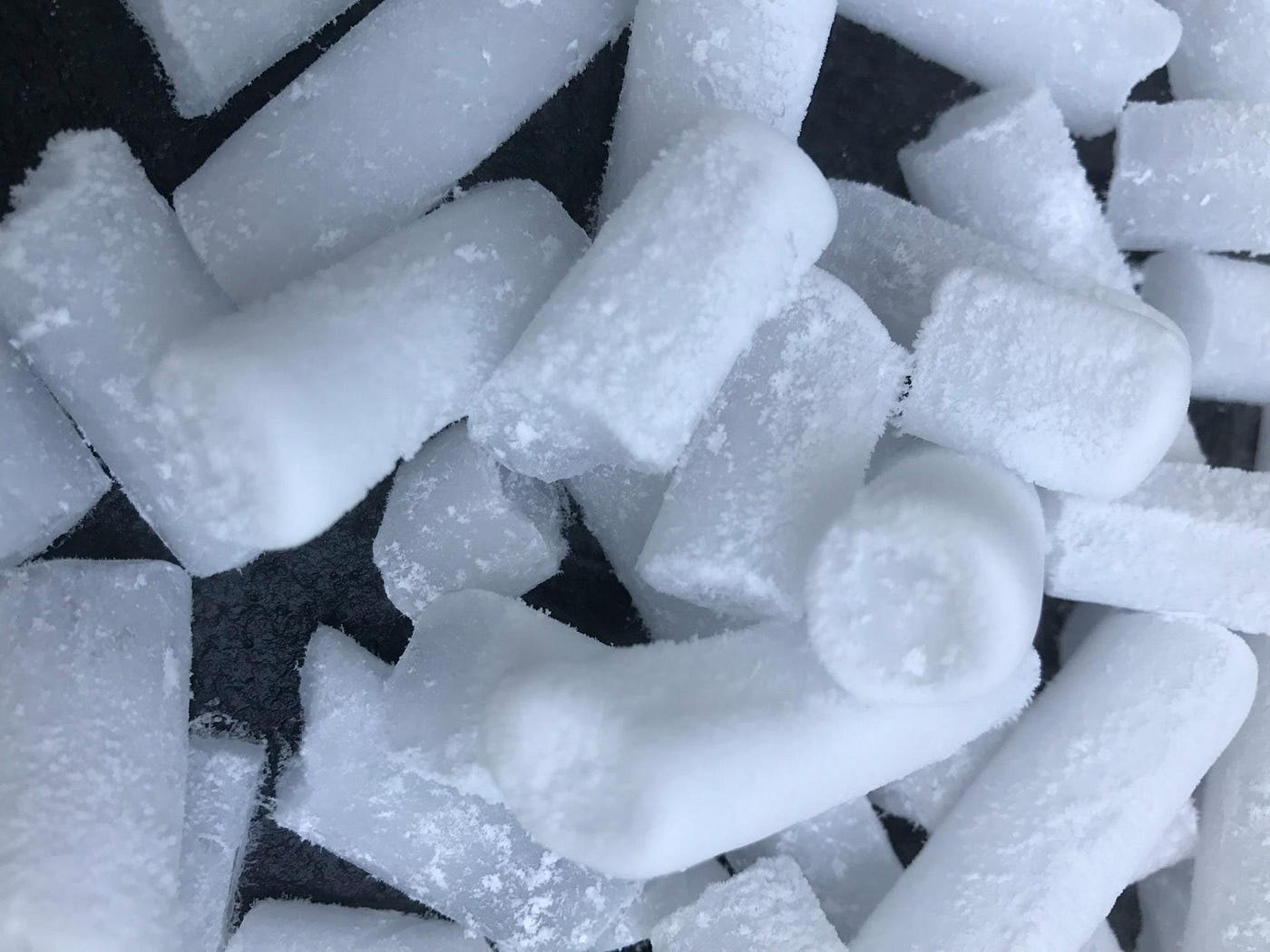 | DRY Ice In Bangalore, 16mm dry ice pellets are widely used for various industrial, medical, and event purposes. View product → |
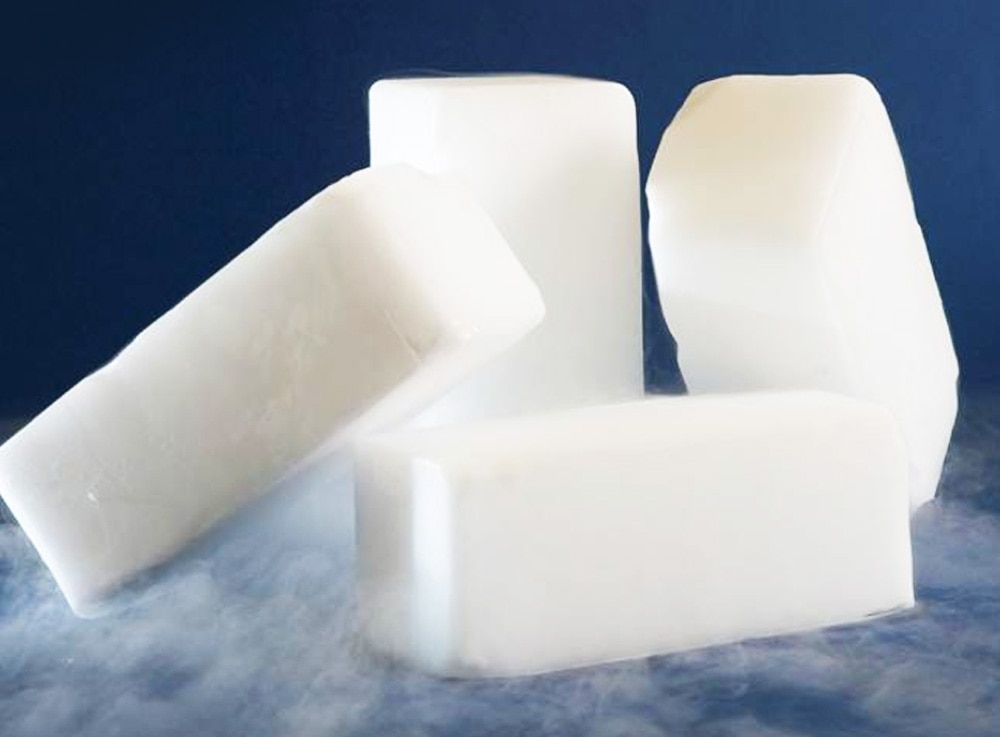 | DRY Ice Dry ice blocks are large, solid pieces of carbon dioxide used for long-lasting cooling in industries such as food preservation, medical storage, and... View product → |
Control Carbon Dioxide Exposure During Handling and Storage
One kilogram of dry ice can produce roughly 0.5–0.55 cubic metres of carbon dioxide near room temperature at atmospheric pressure. Sublimation is rapid, so use strong ventilation and never handle it in a confined room, vehicle cabin, cold room or elevator without an assessed control plan.
Install a carbon-dioxide monitor wherever gas could accumulate; a laboratory dry ice supplier in Bangalore should provide vented packaging.
NIOSH lists 5,000 ppm as an 8-hour exposure limit, 30,000 ppm as a short-term exposure limit and 40,000 ppm as immediately dangerous to life or health. Treat headache, dizziness, confusion, unusual drowsiness, shortness of breath or loss of coordination as an alarm.
- Leave the area immediately and get fresh air. Do not re-enter to retrieve material or investigate the source.
- Wear insulated cryogenic gloves, eye protection and long sleeves. Use tongs or a scoop, and never touch dry ice with bare skin because cold burns can occur.
- Keep every container vented. Never seal dry ice in a cooler, bottle, tube, shipping box or secondary container without a gas-escape path; pressure can rise as the solid sublimates.
- If ordering dry ice pellets for laboratory cooling, ask for vented packaging and handling instructions that prevent accumulation during delivery.
At receiving, inspect for excessive fines or cracked pieces, weigh the usable stock promptly and maintain a vent path. Replace material only after verifying the sample’s temperature requirement.
Frequently asked questions
Are dry ice blocks or pellets better for laboratory cooling?
Blocks last longer for the same mass, while pellets provide faster heat transfer and more even contact around containers.
When should you choose 3 mm pellets, 16 mm pellets or blocks?
Choose 3 mm pellets for rapid cooling and close packing, 16 mm pellets for a balance of cooling and duration, and blocks for extended cooling with fewer handling changes.
How do you use dry ice without damaging laboratory samples?
Prevent direct contact when samples could crack, freeze unevenly or suffer thermal shock; use a suitable secondary container and confirm the sample’s temperature limits.
What should a Bangalore laboratory specify when ordering dry ice?
Specify the required mass, form, pellet diameter, purity or quality requirements, packaging, delivery time and receiving contact.
How can you control carbon dioxide exposure during dry ice handling?
Handle dry ice in a well-ventilated area, keep it out of airtight containers, limit time in enclosed spaces and use carbon dioxide monitoring where risk assessment requires it.
Related product
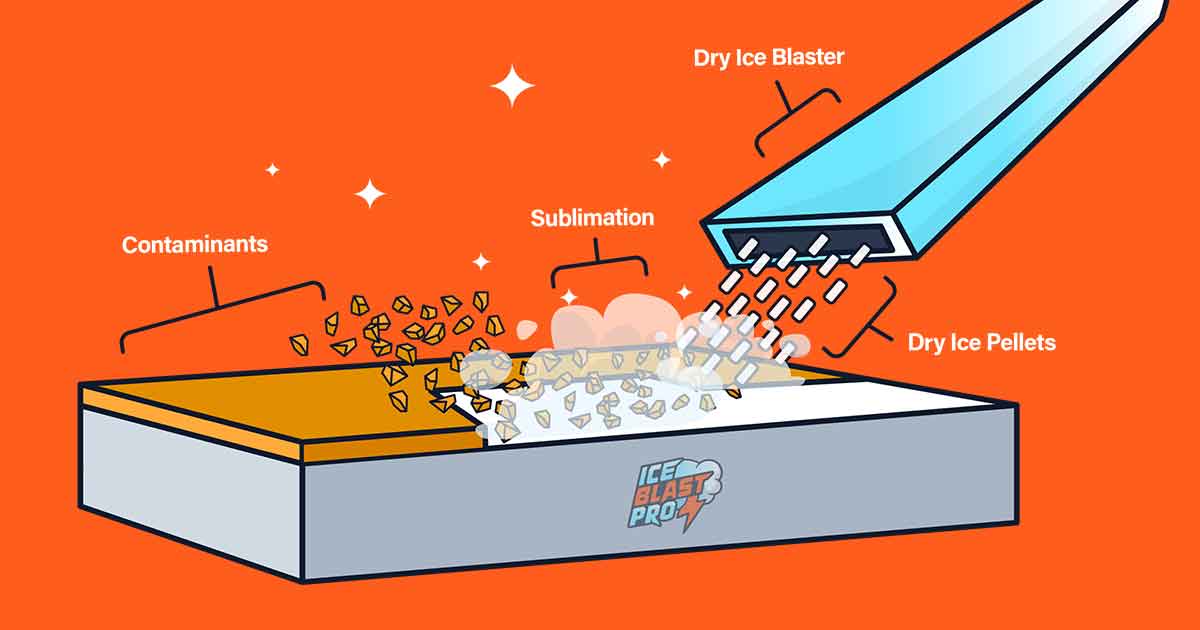 | Dry ice Cleaning Dry ice Body Cleaning Dry ice body cleaning is an innovative and effective method for removing contaminants from surfaces in various industries,... View product → |