

Dry ice cleaning pays off most when water, abrasive media, dismantling or long drying times create a larger production problem than the cleaning itself. By comparing Bangalore industries, contaminants, equipment and site controls, you can identify where dry ice blasting is a practical maintenance tool and where another method will deliver a better result.
Key takeaways
- Test a hidden area for coating adhesion, embrittlement and surface damage.
- Use dry ice for residue removal when water, solvents or abrasives create downtime.
- Require documented controls for food, pharmaceutical and electronics production.
- Confirm ventilation, operator training, equipment access and waste-handling responsibilities before booking.
The Bangalore industries that gain the most from dry ice cleaning
Automotive manufacturing and workshops gain the strongest operational benefit because dry ice removes mould-release residue, rubber flash, adhesive, paint overspray and carbon from dies, moulds, welding fixtures and assembly equipment without aqueous washing or lengthy dismantling.
| Rank | Bangalore industry | Why the benefit is strongest |
|---|---|---|
| 1 | Automotive and auto components | Shorter cleaning downtime for dies, fixtures and assembly lines |
| 2 | Aerospace and defence | Cleans tooling, composites and jigs without abrasive damage or trapped water |
| 3 | Foundries, forging and heavy engineering | Removes carbon, resin and release agents from moulds, dies and robots |
| 4 | Electronics and semiconductor support | Cleans reflow tooling, conveyors and fixtures without spent media |
| 5 | Food and beverage | Reduces moisture-related sanitation delays on ovens, conveyors and packaging equipment |
| 6 | Pharmaceuticals | Supports dry cleaning around sensitive equipment when validation permits it |
| 7 | Plastics and rubber | Removes mould residue, flash and baked-on polymer deposits |
| 8 | Printing | Cleans rollers, grippers and ink-contaminated tooling |
| 9 | Power and general manufacturing | Reaches electrical cabinets, machine interiors and production fixtures |
These are the industries that use dry ice cleaning for Bangalore operations when water, abrasive media or dismantling creates greater disruption. Dry ice still cannot remove every contaminant: heavy scale, deeply bonded rust and ionic residue need another method. Electronics teams must control static charge, enclosure CO₂ and compressed-air quality before work begins.
What dry ice blasting removes from each type of factory equipment
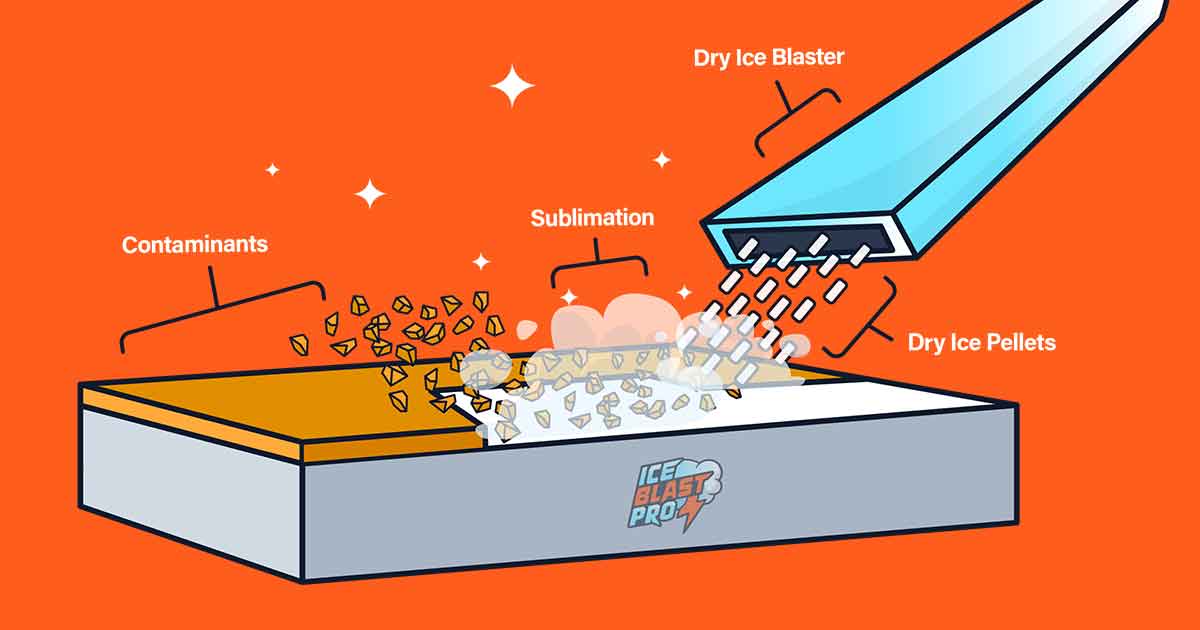
The strongest dry ice blasting applications Bangalore plants use target valuable equipment that is difficult to dismantle or wash. Solid carbon dioxide sublimates into gas, so it removes contamination without leaving water or spent media, but the loosened soil still needs capture and disposal.
- Automotive dies, moulds and welding fixtures: remove rubber flash, mould-release residue, adhesive, paint overspray, weld spatter and carbon.
- Reflow and wave-solder tooling, conveyors and electronics fixtures: remove flux residue, dust and baked-on deposits; do not blast populated circuit boards without a validated process.
- Food ovens, conveyors, packaging equipment and tooling: remove grease, baked food soil and allergens, then complete the site’s sanitation procedure.
- Plastic and rubber moulds: remove release agents, polymer residue and flash without gouging the mould surface.
- Assembly equipment and electrical cabinets: remove oil, grease and dust where water could enter bearings, wiring or controls.
| Equipment and residue | What blasting does | Important limit |
|---|---|---|
| Dies, moulds and fixtures | Removes carbon, adhesive and flash | Bare steel still needs rust prevention |
| Conveyors and ovens | Lifts grease and baked deposits | Capture soil and verify sanitation |
| Tooling and cabinets | Removes dust and oil without water | Protect enclosures and control CO₂ |
| Porous or corroded parts | Limited surface cleaning | It cannot extract embedded contamination or guarantee corrosion removal |
When dry ice beats solvents, water, steam or abrasive media
Choose the method by residue, substrate, waste, utilities and the required cleanliness level. For industrial dry ice blasting Bangalore projects, dry ice wins when you need to clean tooling, electrical cabinets or production equipment without water, spent media or lengthy drying. It loses when contamination must be chemically extracted.
| Option | Main advantage | Choose it when |
|---|---|---|
| Dry ice blasting | Sublimates into CO₂; no blast-media waste or water | You need to remove carbon, grease, mould release, adhesive, dust or baked deposits from non-porous equipment |
| Solvent wiping | Dissolves oils and molecular residue | A specification demands ionic, oily or chemical cleanliness |
| Water or steam | Flushes soluble soil and cools surfaces | The equipment tolerates moisture and you can manage wastewater, drying and corrosion risk |
| Abrasive or soda blasting | Cuts coatings and corrosion mechanically | You need aggressive removal and can accept surface profile, dust and media recovery |
| Manual scraping | Low equipment cost | Deposits are localised and labour time matters more than downtime |
Check the air system before approving the job: the compressor must deliver the manufacturer’s specified pressure and flow at the nozzle, with oil and condensate filtration. Reject dry ice for porous contamination, guaranteed corrosion-product removal or uncontrolled CO₂ exposure; use ventilation, oxygen monitoring where required and hearing protection.
A cured adhesive or ink film may still need solvent or mechanical pre-treatment.
How to test whether a surface and production line are suitable
Approve a line only after a controlled trial proves that the substrate, contamination and utilities can tolerate blasting without damaging equipment or spreading soil.
1. Identify the material: stainless steel, aluminium, painted metal, plastic, rubber, seals and composites can react differently. Test an inconspicuous area for coating lift, whitening, erosion or dimensional change; reject porous surfaces when contamination must be chemically extracted.
2. Isolate electrical equipment, protect exposed connectors and assess enclosure access. Dry ice is nonconductive, but impact can create static charge, while sublimated CO₂ can enter cabinets and displace oxygen. Use grounding, ventilation and hearing protection.
3. Map the access route. Confirm nozzle clearance, masking for bearings and sensors, extraction for loosened dust, and a safe position for the operator. A blocked line often forces excessive pressure that damages labels, gaskets or insulation.
4. Name the contaminant and define the endpoint. Capture grease, allergen residue, carbon, adhesive and paint fragments; dry ice leaves no spent media, not no waste. Do not specify it for guaranteed corrosion removal.
5. Check clean, dry compressed air at the nozzle, not the compressor’s horsepower or receiver size. Verify pressure, flow, filtration and condensate control; oil or water carryover can contaminate the line.
A scope for precision cleaning services Bangalore should record substrate, pressure, media consumption, masking, extraction and acceptance inspection. That discipline separates dry ice cleaning for factories Bangalore from an uncontrolled blast.
Food, pharmaceutical and electronics work needs documented control
A clean-looking surface does not prove a controlled process. A quote for precision cleaning services bangalore should define the substrate, contaminant, allowable surface change, blast pressure, dry-ice consumption, masking, extraction method and acceptance inspection. State whether the work is dry, particulate-controlled or validated for a regulated production area.
Require these records before approving production-area cleaning:
- A cleaning-validation protocol identifying residue recovery, particulate shedding, bioburden or endotoxin limits, sampling points and visual, swab or analytical acceptance criteria.
- A recovery record showing what removed soil, grease, allergen or pharmaceutical residue was captured, where it was disposed of and how the area was inspected afterward.
- A food-safety sanitation sign-off after blasting. No secondary media does not remove the need to complete the site’s validated cleaning procedure.
- An equipment-specific electronics assessment covering static-charge control, enclosure protection and oxygen monitoring. Do not blast populated circuit boards without a validated process.
For pharmaceutical and medical-device sites, treat dry ice cleaning as a controlled method for external equipment, tooling, moulds, filling-line components and maintenance areas unless validation proves suitability for product-contact surfaces. Dry ice blasting does not establish sterility.
In electronics plants, prevent sublimated carbon dioxide from entering enclosures; in every sensitive area, record operator, equipment ID, batch or job number, settings, inspection result and deviations.
The safety and procurement checklist for a Bangalore cleaning job
Approve the job only when the contractor’s plan names the equipment, substrate, contaminant, allowable surface change, cleaning pressure, dry-ice consumption and acceptance test.
1. Require a site survey covering access, masking, electrical isolation, nearby personnel, drainage, lighting and waste capture. Include hearing protection, lockout/tagout and a ventilation plan with CO₂ monitoring. Keep concentrations below OSHA’s 5,000 ppm eight-hour limit; treat 40,000 ppm, NIOSH’s IDLH level, as an emergency threshold.
2. Confirm the utility specification at the nozzle: manufacturer-required compressed-air pressure and flow, oil and water filtration, condensate control and hose connections. Compressor horsepower and receiver size alone do not prove capacity.
3. Define the service scope for precision cleaning services Bangalore: named parts, contaminants, pressure range, media quantity, masking, extraction, visual inspection and permitted residue. State whether the area must be dry, particulate-controlled or validated.
4. For food plants, require soil and allergen capture, inspection and completion of the site’s validated sanitation procedure. For pharmaceutical or medical-device work, require residue recovery, particulate, bioburden or endotoxin criteria, swab or analytical tests, and a statement that blasting does not establish sterility.
5. Reject dry ice cleaning for factories Bangalore where chemical extraction, porous contamination or guaranteed corrosion removal is the actual requirement. SK Dry Ice can be assessed against this written scope rather than a generic cleaning quotation.
Related products
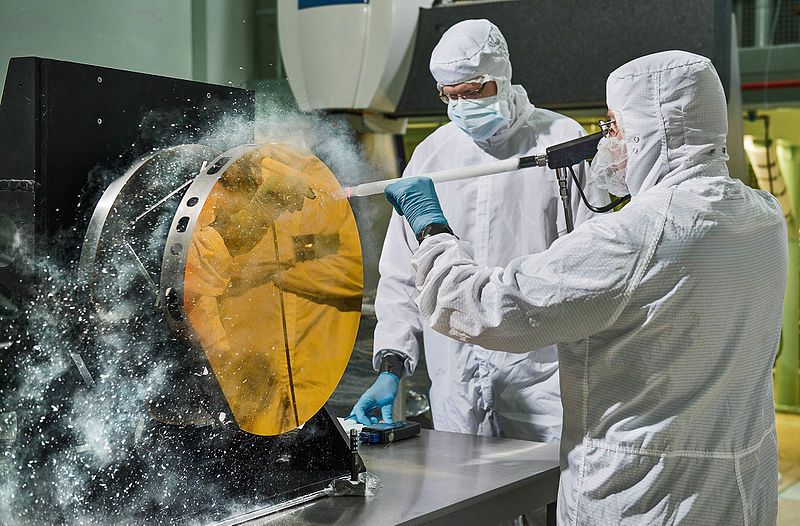 | Dry ice Cleaning Dry ice cleaning is an innovative method that uses dry ice pellets blasted at high speeds to remove contaminants from surfaces without causing... View product → |
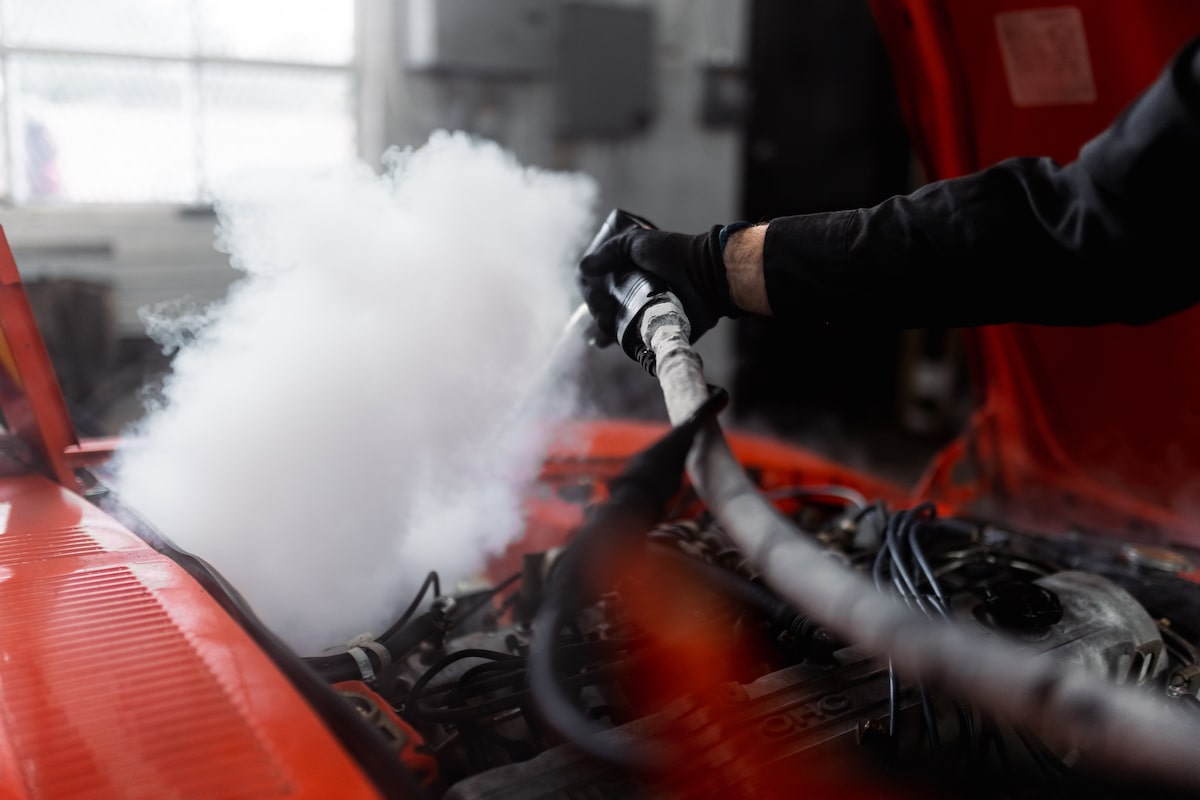 | Dry ice Cleaning Dry ice engine bay cleaning is an effective method for removing grease, dirt, and grime from the engine compartment of vehicles. View product → |
Frequently asked questions
Which Bangalore industries benefit most from dry ice cleaning?
Automotive manufacturing and workshops gain strong benefits from removing mould-release residue, rubber flash, adhesive, paint overspray and carbon from dies, moulds, welding fixtures and assembly equipment. Food processing, pharmaceuticals, electronics and other precision manufacturing operations also benefit when they need low-residue cleaning without aqueous washing.
What does dry ice blasting remove from factory equipment?
It removes mould-release residue, rubber flash, adhesive, paint overspray, carbon and similar deposits from equipment such as dies, moulds, welding fixtures and assembly machinery. Confirm the deposit and substrate before selecting the process.
When does dry ice beat solvents, water, steam or abrasive media?
Dry ice is a strong option when you need to avoid added water, solvent residues, abrasive wear or lengthy dismantling. Water or steam can suit heat-tolerant equipment that needs washing, while solvents or abrasives remain appropriate when their cleaning or surface-finishing advantages outweigh handling and waste requirements.
How can you test whether a production line is suitable?
Run a controlled trial on a representative, preferably hidden area. Check cleaning performance, coating adhesion, surface damage, electrical protection, residue removal and access around moving or delicate components before cleaning the full line.
What controls do food, pharmaceutical and electronics factories need?
Document the cleaning method, equipment identification, operator, date, dry ice specification, pressure settings, inspection result and any follow-up sanitation or verification. Protect sensitive electronics, control contamination and align the procedure with your internal quality requirements.
Related products
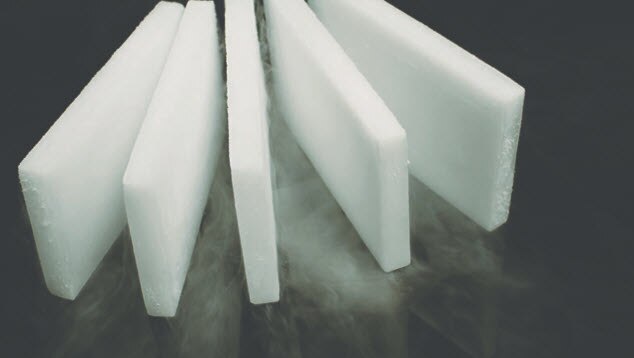 | DRY Ice In Bangalore, dry ice cubes are commonly used for cooling, food preservation, and creating special fog effects at events. View product → |
 | Dry ice Cleaning Dry ice Body Cleaning Dry ice body cleaning is an innovative and effective method for removing contaminants from surfaces in various industries,... View product → |